

KPV Research Hub · Evidence Overview
KPV research evidence: what has actually been studied?
A structured review of the Lys-Pro-Val tripeptide, with emphasis on intestinal-cell assays, mouse colitis models, and the absence of adequate human trials.
Evidence at a glance
Overview
KPV is the tripeptide Lys-Pro-Val, corresponding to the C-terminal sequence of alpha-melanocyte-stimulating hormone. Research has focused on anti-inflammatory signaling and peptide transport, particularly in intestinal epithelial systems. Its small size does not remove the need for identity, purity, stability, and exposure data.
Research background
A frequently cited 2008 study evaluated KPV uptake through the PepT1 transporter in intestinal epithelial and immune-cell systems and in two mouse colitis models. The paper linked uptake to changes in inflammatory signaling and cytokine measures. This is mechanistic and preclinical evidence, not a human efficacy study.
Findings by research area
| Research area | What has been reported | What it does not establish |
|---|---|---|
| Cell signaling | Nanomolar KPV was reported to affect NF-κB/MAPK activation and cytokine secretion in tested cell systems. | A clinical anti-inflammatory effect. |
| Transport | Experiments implicated PepT1 in KPV uptake. | Bioavailability across human formulations and routes. |
| Mouse colitis | Oral KPV reduced selected inflammatory measures in DSS- and TNBS-induced models. | Treatment of human inflammatory disease. |
Human data
No adequate randomized human trial of KPV itself was identified in the primary literature used for this summary. Human-derived cell lines are not human clinical evidence. Accordingly, safety, pharmacokinetics, and efficacy in people remain unresolved.
Animal data
The Dalmasso study used DSS- and TNBS-induced mouse colitis models and reported lower histologic and cytokine-related measures with KPV. These are deliberately induced disease models with species-specific transport and immune biology.
In-vitro and analytical context
Caco2-BBE, HT29-Cl.19A, and Jurkat cells were used to investigate transport and signaling. Concentration, transporter expression, inflammatory stimulus, cell lineage, and assay selection all shape the result.
Research limitations
- No adequate controlled human outcome trials were identified.
- The strongest evidence is mechanistic and preclinical.
- Transport and stability can vary by formulation and biological compartment.
- Long-term toxicology and immunologic consequences are not established.
Future research
Research priorities include validated analytical methods, stability and transport studies, staged pharmacokinetics and toxicology, and only then appropriately controlled human investigation with predefined outcomes.
Primary references
Related Research Library articles
- How to read a Certificate of Analysis without overreading it
- HPLC basics: what a chromatogram can and cannot tell you
- Mass spectrometry basics: identity evidence, m/z, and method context
Article record
- Research question
- What does the published evidence on KPV show across human, animal, and laboratory research?
- Evidence cutoff
- July 15, 2026
- Article status
- Published educational research summary; not independently peer reviewed
- Author
- JD BioWorks Research Library
- Editorial review
- JD BioWorks Research Library
- Planned review cycle
- At least annually, or sooner if material evidence or regulatory information changes
This article summarizes published research for educational and laboratory-information purposes. It is not medical advice, does not provide instructions for personal use, and does not establish that any material is safe or effective for human or veterinary use.
Related Research Materials
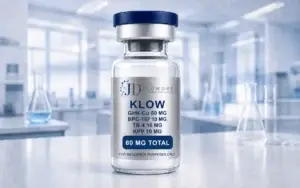
KLOW 80 mg Research Blend
KLOW 80 mg research blend labeled GHK-Cu 50 mg, BPC-157 10 mg, TB-500 10 mg, and KPV 10…
View Research Material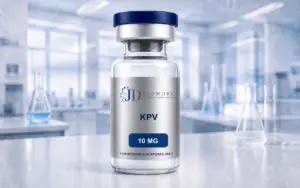
KPV
KPV 10 mg research material. Lot-specific analytical documentation is available below.
View Research Material