
FDA Peptide Compounding Vote: What It Actually Means
Short answer: The FDA peptide compounding vote in July 2026 did not make BPC-157, KPV, TB-500, MOTS-C, Semax, or Epitalon FDA-approved drugs. An FDA advisory committee recommended that those six peptide-related substances be considered for the Section 503A Bulks List. The recommendations are nonbinding, and FDA must complete additional steps before the list changes.
That distinction matters. Headlines about an “FDA peptide vote” can easily blur three very different concepts: an advisory recommendation, permission for certain pharmacies to compound from bulk substances under specific legal conditions, and FDA approval of a drug for a particular use. They are not interchangeable.
What happened at the July 2026 FDA meeting?
On July 23 and 24, 2026, the FDA’s Pharmacy Compounding Advisory Committee, commonly called PCAC, reviewed seven peptide-related bulk drug substances for possible inclusion on the Section 503A Bulks List. According to the official FDA meeting materials, the substances and uses considered were:
- BPC-157: ulcerative colitis
- KPV: wound healing and inflammatory conditions
- TB-500: wound healing
- MOTS-C: obesity and osteoporosis
- Emideltide, also called DSIP: opioid withdrawal, chronic insomnia, and narcolepsy
- Semax: cerebral ischemia, migraine, and trigeminal neuralgia
- Epitalon: insomnia
Contemporaneous reporting from The Associated Press and STAT indicates that the committee recommended BPC-157, KPV, TB-500, MOTS-C, Semax, and Epitalon for potential inclusion. It recommended against emideltide. These were recommendations to FDA—not final agency decisions.
Did the FDA approve BPC-157 or the other peptides?
No. An advisory committee vote is not an FDA drug approval. FDA explains on the meeting page that advisory committees provide independent expert advice and make nonbinding recommendations. The agency considers that input but is not legally required to follow it.
FDA drug approval is a separate process. It generally requires a sponsor to submit evidence supporting a specific product’s quality, safety, and effectiveness for a defined indication, formulation, dose, route of administration, and patient population. A committee recommendation about a bulk ingredient for compounding does not establish any of those product-specific findings.
The practical takeaway: “Recommended for the 503A Bulks List” does not mean “FDA approved,” “proven safe,” “proven effective,” or “available for unrestricted use.”
What is the Section 503A Bulks List?
Section 503A of the Federal Food, Drug, and Cosmetic Act describes conditions under which a state-licensed pharmacist or physician may compound a drug for an identified individual patient based on a valid prescription. One of those conditions concerns which bulk drug substances may be used.
The FDA’s 503A bulk-substances resource explains the legal framework and the role of the bulks list. Placement on that list can affect whether qualifying compounders may use a bulk substance, but it does not convert a compounded preparation into an FDA-approved drug.
Compounded drugs are not reviewed through the same premarket approval process as FDA-approved products. Their availability also remains subject to federal requirements, state pharmacy law, prescription requirements, formulation details, and any conditions FDA ultimately adopts.
Did the vote immediately change what pharmacies can compound?
No—the vote itself did not amend the list. FDA stated in its briefing introduction that it would not make a final determination until the advisory process was considered and reviews were finalized. Formal additions to the 503A Bulks List typically require agency action beyond the committee meeting.
Researchers, pharmacists, clinicians, and consumers should therefore check FDA’s current published lists and official announcements rather than relying on a meeting headline or social-media summary. The status may evolve after this article’s publication date.
What did FDA reviewers say about the evidence?
The advisory vote did not erase the evidence gaps described in FDA’s technical reviews. FDA maintains a page on bulk substances that may present significant safety risks. Its entries identify concerns that can include limited or absent human-exposure data, difficulty characterizing an active ingredient, peptide-related impurities, aggregation, and potential immunogenicity.
The agency’s substance-specific briefing documents are the best starting point for understanding what was—and was not—available to reviewers. They can be downloaded from the official meeting page. Importantly, the FDA briefing introduction says the packages were prepared to focus the committee discussion and may not include every issue relevant to the final recommendation.
Evidence also differs by substance. Readers should not generalize a study involving one peptide, formulation, route, or model to another. Preclinical findings can support further investigation, but they do not by themselves demonstrate safety or efficacy in people.
What does the vote mean for peptide researchers?
For research organizations, the meeting is primarily a regulatory and scientific signal:
- Regulatory attention is increasing. FDA devoted a two-day public meeting and separate technical packages to seven peptide-related substances.
- Identity and characterization remain central. The discussion underscores why researchers need clear nomenclature, lot traceability, and analytical context.
- Compounding status and research status are different questions. A substance’s consideration under Section 503A does not determine whether a material is appropriate for a particular laboratory protocol.
- Claims must remain evidence-specific. Committee interest is not proof of a therapeutic outcome and should not be presented as one.
JD BioWorks’ research library provides evidence-focused summaries for several compounds discussed at the meeting, including BPC-157, KPV, TB-500, and MOTS-C. Each should be evaluated on its own evidence record.
What happens next?
FDA will consider the committee’s votes, meeting discussion, submitted comments, staff assessments, and any additional review before reaching final decisions. The agency may update its compounding resources or pursue further administrative steps. Until FDA publishes a final action, the most accurate wording is that six substances received favorable advisory recommendations and one did not.
A separate FDA page also states that another PCAC meeting is expected before the end of February 2027 to discuss additional substances, including GHK-Cu. That future review should likewise be treated as an advisory process, not an approval pathway.
Frequently asked questions
Is BPC-157 FDA approved after the July 2026 vote?
No. The committee recommended considering BPC-157-related bulk substances for the 503A Bulks List. That is not FDA approval of a BPC-157 drug.
Does a favorable PCAC vote prove a peptide is safe or effective?
No. The vote is expert advice within a compounding-policy process. It does not replace product-specific evidence or FDA’s drug-approval review.
Were all seven peptides recommended?
No. Published meeting coverage reports favorable recommendations for BPC-157, KPV, TB-500, MOTS-C, Semax, and Epitalon, while emideltide received an unfavorable recommendation.
Can a committee vote change before FDA acts?
The recorded committee recommendation does not change, but FDA’s final policy decision can differ because the advice is nonbinding and the agency completes its own review.
Research and regulatory disclaimer: This article is for general educational and laboratory-research context only. It is not medical advice, prescribing guidance, or a representation that any discussed substance is safe, effective, legal for a particular use, or FDA approved. Regulatory status can change; consult current FDA materials and qualified legal or regulatory professionals for specific decisions. JD BioWorks materials are intended for qualified laboratory research and are not for human or veterinary use.
Related Research Materials
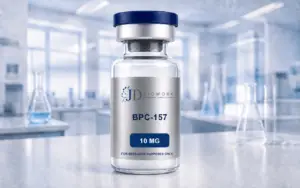
BPC-157
BPC-157 10 mg research material. Lot-specific analytical documentation is available below.
View Research Material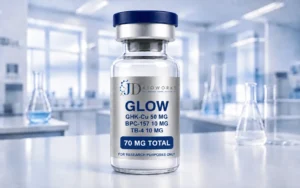
GLOW 70 mg Research Blend
GLOW 70 mg research blend. Labeled formulation: GHK-Cu 50 mg, BPC-157 10 mg, and TB-4 10 mg. Lot-specific…
View Research Material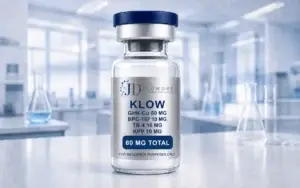
KLOW 80 mg Research Blend
KLOW 80 mg research blend labeled GHK-Cu 50 mg, BPC-157 10 mg, TB-500 10 mg, and KPV 10…
View Research Material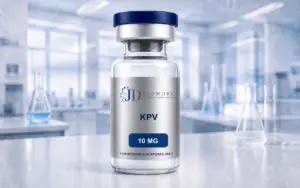
KPV
KPV 10 mg research material. Lot-specific analytical documentation is available below.
View Research Material