
What Is a Peptide Reference Standard—and How Is It Different from a Test Sample?
A peptide reference standard is material characterized for a specified analytical reference role. A test sample is the material being evaluated. Sharing a peptide name—or having a high purity number—does not make the two interchangeable.
The distinction is about the evidence and intended analytical use, not the appearance of the container. This guide explains how to read those roles in a documentation packet; it does not designate any JD BioWorks product as a reference standard.
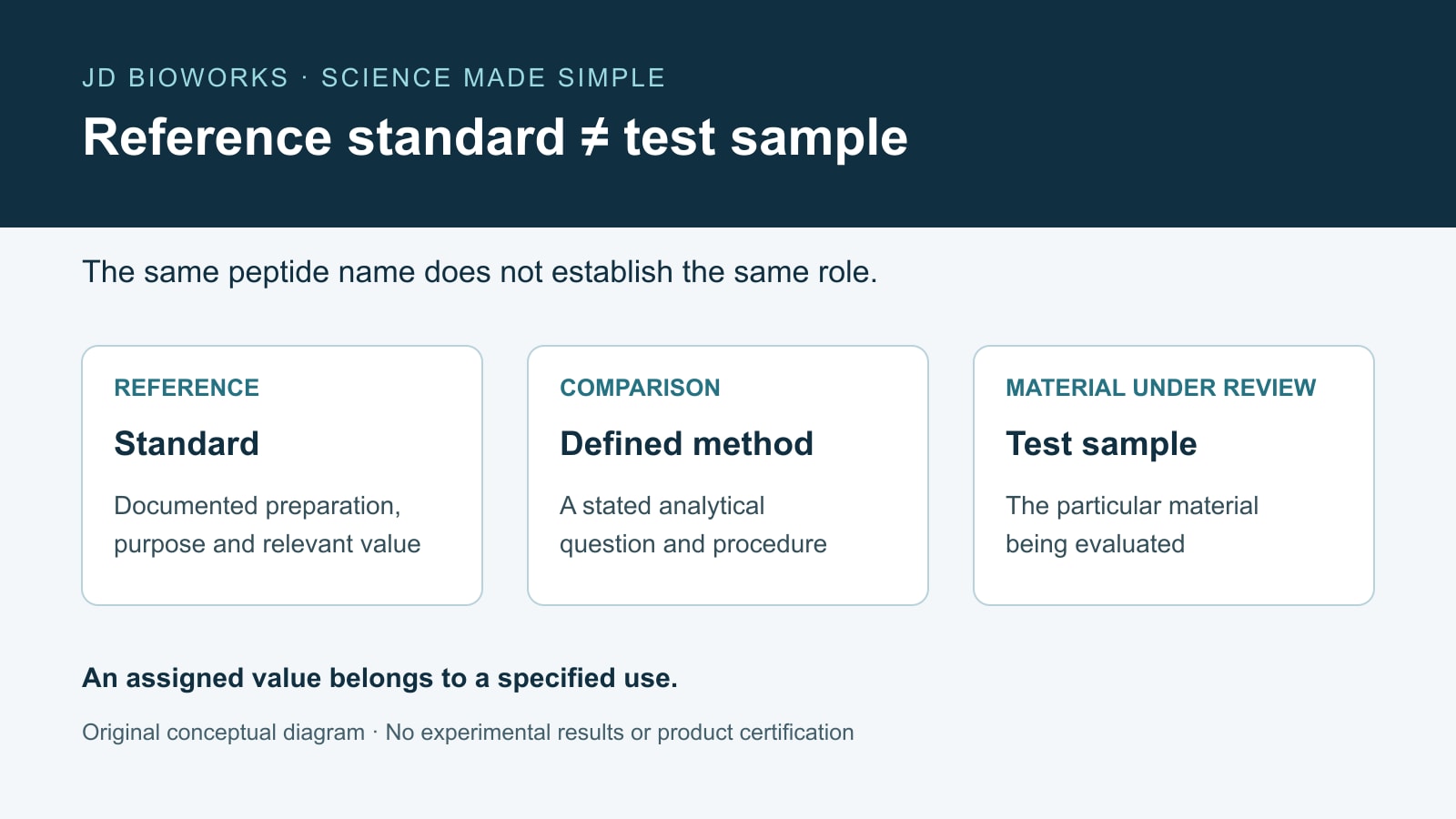
Same name, different analytical roles
McCarthy and colleagues’ original 2023 study of pharmaceutical peptide reference standards describes extensive characterization, value assignment and stability monitoring. Its examples combine complementary methods rather than treating one chromatographic percentage as a complete description.
The authors also make use-specific limits important: a value established for one specified application is not automatically valid for another. These pharmaceutical case studies explain the rigor behind their reference preparations; they are not certification of ordinary commercial research samples or a universal supplier test panel.
| Role | What to identify in the records | What the name alone does not establish |
|---|---|---|
| Reference material | The named preparation, lot, documented purpose and relevant characterization. | Fitness for every analytical procedure. |
| Assigned value, when applicable | The property, units, basis and conditions attached to that value. | An interchangeable value for another property or application. |
| Test sample | The material and lot whose properties are being evaluated. | That its label statement is already a measured result. |
What does “assigned value” add?
An assigned value needs a defined meaning. A value for peptide content and an HPLC area percentage answer different questions. In the 2023 paper’s approach, bulk-material characterization supports a later content assignment to vialed material; the reported scope and statistical qualifications matter.
For the broader analytical distinction, read HPLC versus LC-MS and why chromatographic purity is not automatically peptide content. This page does not replace either methods guide.
Worked example: read the role before interpreting a number
The following packet is fictional. Material A and every identifier are invented; no analytical measurements are provided.
Imagine three documents: a supplier label for Material A, lot EXAMPLE-SAMPLE-01; a laboratory report naming that sample; and a reference-preparation record identifying EXAMPLE-REF-01. Keep the two lots separate in the review. The reference record does not become the sample’s result simply because both documents mention Material A.
Next, suppose the reference record gives a value but the excerpt omits what it represents or where it is applicable. Record the missing context. Do not fill the gap with the sample’s labeled quantity, a purity percentage from another report or a value taken from an unrelated reference lot.
A focused clarification would be: “Which reference preparation and lot were used for the reported comparison, and what documentation defines the relevant value and its application?” That question seeks the record chain. It does not instruct a laboratory to adopt a particular method or acceptance threshold.
Questions to keep with the review
- Which document describes the reference preparation, and which describes the test sample?
- Do the relevant material, lot and report identifiers agree?
- What property and units are stated for a numerical value?
- What method or intended application is attached to it?
- Are validity, storage or suitability qualifications supplied in the applicable records?
These are our documentary review prompts, not a certification checklist. An ordinary COA, a familiar supplier name or a cited paper does not by itself establish that a material is suitable as a quantitative standard. A peer-reviewed discussion of peptide standards for targeted mass spectrometry likewise separates considerations such as identity, purity and peptide amount.
Review the original record next
Use the research peptide documentation checklist to retain the label, lot connection, original report and open questions together. The COA field guide explains the report fields. Do not interpret this educational page as approval of a material for clinical use.
For qualified laboratory, analytical and educational research evaluation only. Not medical guidance, a compendial specification, product certification or instructions for human or veterinary use. JD BioWorks supplies research materials; no endorsement by USP, NIST or the cited authors is implied.